Bare Ruined Choirs (häftad, eng)
Bare Ruined Choirs (häftad, eng)
Gästpris:
Ditt medlemspris:
222 kr
262 kr
Kampanjpris! (-6%)
Kampanjpris! (-20%)
- Inköpspriser för medlemmar (Logga in)
- Frakt från 0 kr
- 14 dagars öppet köp
Frågor? Starta chatt

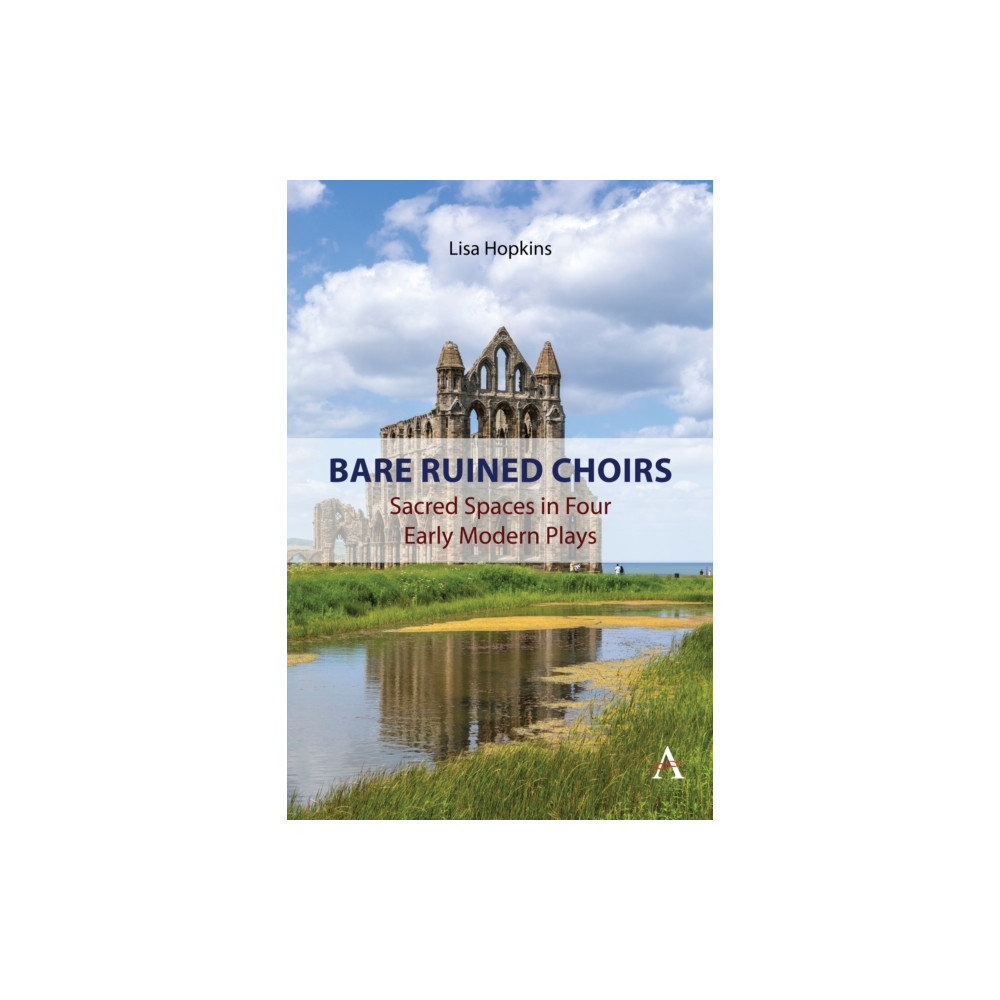
The book argues that these plays show us a society haunted by the unquiet burials of Anglo-Saxon saints and kings and the destruction of shrines and churches during the English Reformation, and peopled by crossover figures who inhabit both the spiritual and the secular realms.
It begins with an introduction which sets out the distinction between spiritual and temporal overlordship of lands, glances at the ways in which sacred and secular spheres of influence could be brought into conflict in plays from the late-sixteenth and early seventeenth centuries, and explains that the book is interested not only in the extent to which those spheres of influence map onto actual territory but also in the ways in which land is perceived as retaining memories of uses to which it has been previously put.
This was particularly the case when royal or saintly bodies had been buried in it, even if the actual burials had been disturbed or lost completely, but other kinds of spaces and places could also carry with them a sense of an ineradicable past (often a specifically pre-Reformation past).
When plays claim to represent such richly suggestive sites as holy wells, abbeys built before the Norman Conquest, or places where martyrdoms or miracles have occurred, they simultaneously suggest the power and appeal of such memories and yet also acknowledge their loss and inaccessibility, not least because what the audience sees is not the place represented but bare boards of the stage standing in for it.
Four chapters then follow.
The first is on the anonymous Thorney Abbey, which offers an origin story for the Anglo-Saxon foundation which preceded the Norman Westminster Abbey during the reign of an unnamed king of England who has a brother (and heir) called Edmund. The Anglo-Saxon St Edmund was well remembered in the early modern period and was particularly important to English Catholic exiles; the unnamed brother can be identified as Athelstan, grandson of Alfred the Great, who was king of England from 925 to 939 but never married (probably because he was illegitimate), making Thorney Abbey part of a group of early modern plays which found Athelstan a flexible, suggestive and culturally resonant figure who could be used to discuss a range of important issues, including succession, the status of the monarch, and the benefits and logic of celibacy.
Thorney Abbey presents the foundation of the abbey as a neat and simple process, but the subsequent history of Westminster Abbey was not in fact quite so trouble-free and that leaches into the play, which also has strong similarities to Macbeth in ways which put pressure on Shakespeare’s play, particularly on its use of Edward the Confessor, helping us to see that Macbeth treads a nervous line between implying the superiority of a king who collapses the distinction between spiritual and temporal and refusing to actually show him.
The second chapter is on another anonymous play, A Knack to Know a Knave, which features Edgar, king of Mercia and Northumbria (c. 944–975), and Saint Dunstan, two figures who carried considerable cultural heft. Dunstan was a complex and controversial figure whose association with miracles that savoured of trickery meant that to early Reformers, he was even more suspect than most saints.
Edgar’s main achievement was the revival of Benedictine monasticism, which he funded by large grants of land and by enforcing the payment of the ecclesiastical tax known as Peter’s Pence, making him almost the perfect test case for considering the relationship between temporal and spiritual power.
The third chapter focuses on William Rowley’s A Shoemaker a Gentleman, which tells the story of the shoemaker saint Crispin and his brother Crispian and the early English and Welsh martyrs St Hugh, St Winifred, St Alban and St Amphiabel in ways which evoke the long and difficult history of debates about the extent of British Catholics’ allegiance to the Pope.
Last comes a chapter on Anthony Brewer’s The Lovesick King, which uses the memory of a local benefactor to comment on the relationship between civic and ecclesiastical constructions.
The final section of the book is a coda which argues that if some of these plays engage with Hamlet and Macbeth, then King Lear in turn engages with some of them.
Although the supposedly historical figure of King Lear belonged to a time before the Romans, the play points at the Anglo-Saxon past in a number of respects: its use of the names Edmund, Oswald and Edgar (who apparently succeeds as King Edgar); its representation of an England being divided into different constituent realms; and its interest in female succession and in the question of whether illegitimacy was a bar to inheriting the throne.
The blinding of Gloucester might recall the use of mutilation to disqualify possible successors, as when Edward the Confessor’s elder brother Alfred Aetheling was blinded by Earl Godwin, and Lear’s discovery that he cannot stop rain perhaps recalls Canute’s supposed failure to turn back the tide.
Lost battles too were a feature of Anglo-Saxon England, both Essendon and Hastings being perceived as disastrous and era-ending. Above all, the play seems to show us a world which is both pre-Christian yet at the same time post-Catholic, being troubled by the memory of Rome in something of the same way as the great Anglo-Saxon poem The Ruin; but although there may be ruins, there are no sacred spaces in King Lear.
The play can thus be read as a warning of what happens if there are no abbeys; on its desolate heath, we find the ultimate expression of the nightmare landscape feared in all these plays.
| Format | Häftad |
| Omfång | 72 sidor |
| Språk | Engelska |
| Förlag | Anthem Press |
| Utgivningsdatum | 2025-07-01 |
| ISBN | 9781839995118 |
Artikelnummer
3652138
EAN
9781839995118
Leverans:
Denna produkt skickas från oss inom 6 - 7 vardagar. I kassan väljer du om du vill få leverans med Budbee, Airmee, Best Transport, Early Bird, Postnord eller DB Schenker. Vissa speditörer har vikt- eller storleksbegränsningar och kan av den anledningen saknas som alternativ i kassan om du handlar många eller väldigt stora produkter.Fri retur:
För medlemmar gäller fri retur och 14 dagars full returrätt från den dagen du tar emot din leverans. För övriga kostar retur från 49 kr.Undantag för retur- och ångerrätt:
Dessa är exempel på varor som inte omfattas av retur- eller ångerrätt. Observera att det kan finnas andra undantag som inte listas här.- Använda, skadade och/eller inkompletta produkter
- Dagligvaror (livsmedel, läkemedel, nikotinprodukter)
- Hygienartiklar & kroppsnära produkter (rakapparater, in ear-hörlurar, aktivitetsklockor)
- Intimprodukter (menskoppar, kondomer och glidmedel)
- Kosmetikprodukter (inkl. hår- och hudvårdsprodukter, parfymer, etc.)
- Underkläder (inkl. badkläder, underställ och strumpor)
- Ljud- & bildupptagningar, spel/program (om förseglingen brutits eller licensnyckeln erhållits.)
- Teknikprodukter om försegling brutits eller programvara har installerats (mobiltelefoner, surfplattor, laptops, etc.)
- Gratisprodukter
Om du är osäker på om en produkt omfattas av ångerrätt kan du alltid kontakta vår kundtjänst på info@buyersclub.se, så hjälper vi dig gärna!
Leveranser: