Forensic Archaeology (häftad, eng)
Forensic Archaeology (häftad, eng)
Gästpris:
Ditt medlemspris:
437 kr
507 kr
Kampanjpris! (-9%)
Kampanjpris! (-22%)
- Inköpspriser för medlemmar (Logga in)
- Frakt från 0 kr
- 14 dagars öppet köp
Frågor? Starta chatt

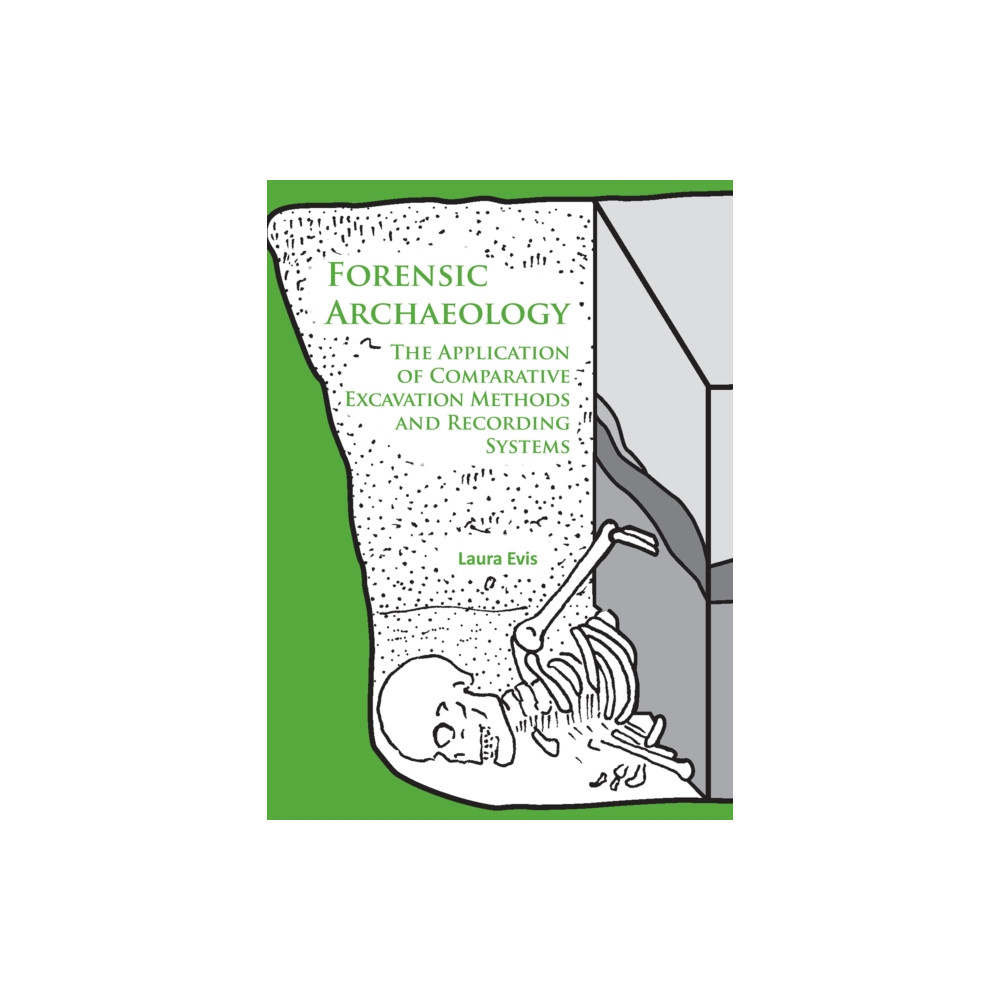
Archaeological excavation has been widely used in the recovery of human remains and other evidence in the service of legal cases for many years. However, established approaches will in future be subject to closer scrutiny following the announcement by the Law Commission in 2011 that expert evidence will in future be subject to a new reliability-based admissibility test in criminal proceedings.
This book evaluates current archaeological excavation methods and recording systems – focusing on those used in the United Kingdom, Ireland, Australasia, and North America – in relation to their use in providing forensic evidence, and their ability to satisfy the admissibility tests introduced by the Law Commission, and other internationally recognised bodies.
In order to achieve this aim, two analyses were undertaken. First, attention was directed to understanding the origins, development, underpinning philosophies, and current use of archaeological excavation methods and recording systems in the regions selected for study. A total of 153 archaeological manuals/guidelines were examined from archaeological organisations operating in the United Kingdom, Ireland, Northern Ireland, Scotland, the United States, Canada, Australia, and New Zealand.
This research indicated that the Stratigraphic Excavation method and Single Context Recording system, the Demirant Excavation method and Standard Context Recording system, the Quadrant Excavation method and Standard Context Recording system, and the Arbitrary Level Excavation method and Unit Level Recording system were the approaches most often used to excavate and record graves.
Second, the four defined methodological approaches were assessed experimentally, using a grave simulation of known properties to test the excavation, recording, and interpretation of material evidence, the definition of stratigraphic contexts, and understanding of stratigraphic relationships.
The grave simulation also provided opportunities to measure archaeologists’ narratives of the grave formation process against the known properties of the grave simulation, and to assess whether archaeological experience had any impact on evidence recovery rates. Fifty repeat excavations were conducted.
The results obtained from this experimental study show that the Quadrant Excavation method and Standard Context Recording system was the most consistent, efficient, and reliable archaeological approach to use to excavate and record clandestine burials and to formulate interpretation-based narratives of a grave’s formation sequence.
In terms of the impact that archaeological experience had on evidence recovery rates, archaeological experience was found to have little bearing upon the recovery of evidence from the grave simulation. It is suggested that forensic archaeologists use the Quadrant Excavation method and Standard Context Recording system to excavate and record clandestine burials.
If this approach is unable to be used, the Demirant Excavation method and Standard Context Recording system, or the Stratigraphic Excavation method and Single Context Recording system should be used. Both of these aforementioned techniques proved to be productive in terms of material evidence recovery and the identification and definition of stratigraphic contexts.
The Arbitrary Level Excavation method and Unit Level Recording system should not be used, as this method proved to have an extremely poor evidence recovery rate and destroyed the deposition sequence present within the simulated grave.
This book evaluates current archaeological excavation methods and recording systems – focusing on those used in the United Kingdom, Ireland, Australasia, and North America – in relation to their use in providing forensic evidence, and their ability to satisfy the admissibility tests introduced by the Law Commission, and other internationally recognised bodies.
In order to achieve this aim, two analyses were undertaken. First, attention was directed to understanding the origins, development, underpinning philosophies, and current use of archaeological excavation methods and recording systems in the regions selected for study. A total of 153 archaeological manuals/guidelines were examined from archaeological organisations operating in the United Kingdom, Ireland, Northern Ireland, Scotland, the United States, Canada, Australia, and New Zealand.
This research indicated that the Stratigraphic Excavation method and Single Context Recording system, the Demirant Excavation method and Standard Context Recording system, the Quadrant Excavation method and Standard Context Recording system, and the Arbitrary Level Excavation method and Unit Level Recording system were the approaches most often used to excavate and record graves.
Second, the four defined methodological approaches were assessed experimentally, using a grave simulation of known properties to test the excavation, recording, and interpretation of material evidence, the definition of stratigraphic contexts, and understanding of stratigraphic relationships.
The grave simulation also provided opportunities to measure archaeologists’ narratives of the grave formation process against the known properties of the grave simulation, and to assess whether archaeological experience had any impact on evidence recovery rates. Fifty repeat excavations were conducted.
The results obtained from this experimental study show that the Quadrant Excavation method and Standard Context Recording system was the most consistent, efficient, and reliable archaeological approach to use to excavate and record clandestine burials and to formulate interpretation-based narratives of a grave’s formation sequence.
In terms of the impact that archaeological experience had on evidence recovery rates, archaeological experience was found to have little bearing upon the recovery of evidence from the grave simulation. It is suggested that forensic archaeologists use the Quadrant Excavation method and Standard Context Recording system to excavate and record clandestine burials.
If this approach is unable to be used, the Demirant Excavation method and Standard Context Recording system, or the Stratigraphic Excavation method and Single Context Recording system should be used. Both of these aforementioned techniques proved to be productive in terms of material evidence recovery and the identification and definition of stratigraphic contexts.
The Arbitrary Level Excavation method and Unit Level Recording system should not be used, as this method proved to have an extremely poor evidence recovery rate and destroyed the deposition sequence present within the simulated grave.
| Format | Häftad |
| Omfång | 252 sidor |
| Språk | Engelska |
| Förlag | Archaeopress |
| Utgivningsdatum | 2016-11-30 |
| ISBN | 9781784914844 |
Artikelnummer
3694716
EAN
9781784914844
Leverans:
Denna produkt skickas från oss inom 6 - 7 vardagar. I kassan väljer du om du vill få leverans med Budbee, Airmee, Best Transport, Early Bird, Postnord eller DB Schenker. Vissa speditörer har vikt- eller storleksbegränsningar och kan av den anledningen saknas som alternativ i kassan om du handlar många eller väldigt stora produkter.Fri retur:
För medlemmar gäller fri retur och 14 dagars full returrätt från den dagen du tar emot din leverans. För övriga kostar retur från 49 kr.Undantag för retur- och ångerrätt:
Dessa är exempel på varor som inte omfattas av retur- eller ångerrätt. Observera att det kan finnas andra undantag som inte listas här.- Använda, skadade och/eller inkompletta produkter
- Dagligvaror (livsmedel, läkemedel, nikotinprodukter)
- Hygienartiklar & kroppsnära produkter (rakapparater, in ear-hörlurar, aktivitetsklockor)
- Intimprodukter (menskoppar, kondomer och glidmedel)
- Kosmetikprodukter (inkl. hår- och hudvårdsprodukter, parfymer, etc.)
- Underkläder (inkl. badkläder, underställ och strumpor)
- Ljud- & bildupptagningar, spel/program (om förseglingen brutits eller licensnyckeln erhållits.)
- Teknikprodukter om försegling brutits eller programvara har installerats (mobiltelefoner, surfplattor, laptops, etc.)
- Gratisprodukter
Om du är osäker på om en produkt omfattas av ångerrätt kan du alltid kontakta vår kundtjänst på info@buyersclub.se, så hjälper vi dig gärna!
Leveranser: