Statecraft 2.0 (häftad, eng)
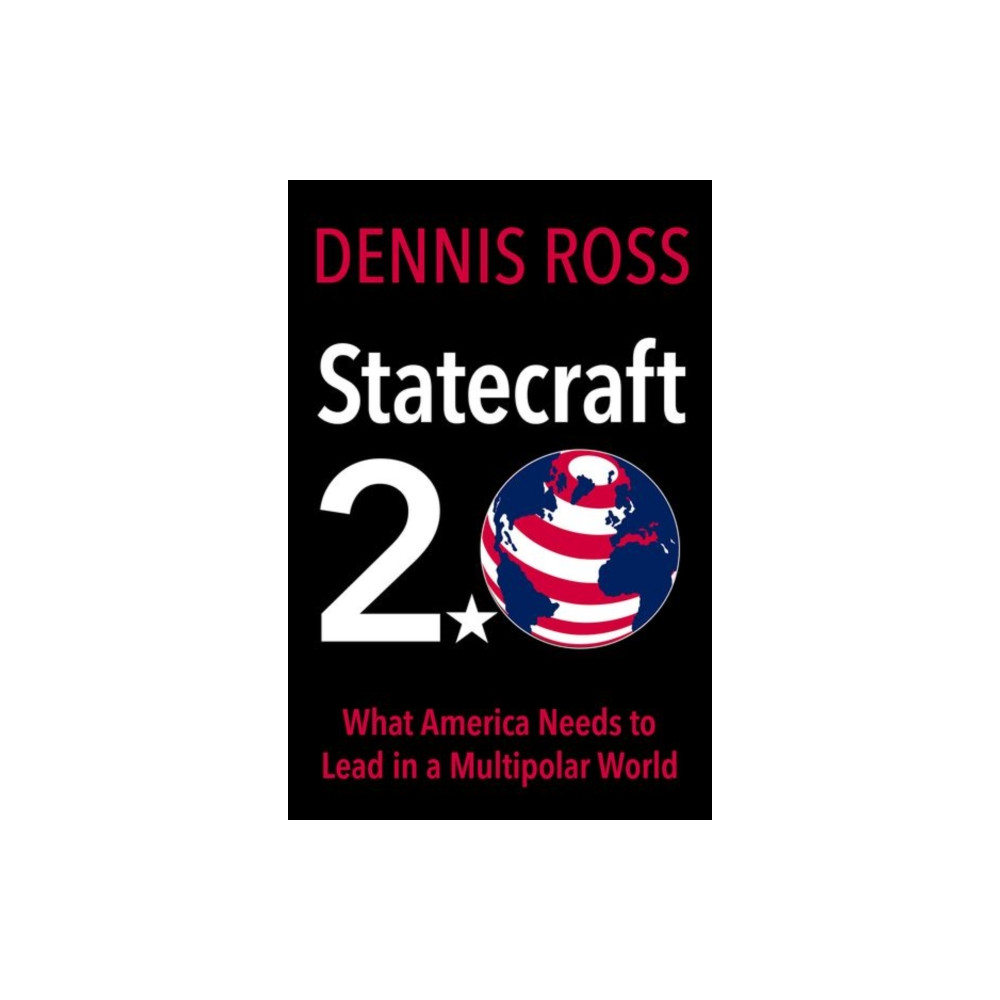
Statecraft 2.0 (häftad, eng)
Gästpris:
Ditt medlemspris:
198 kr
249 kr
Spara
57 kr jämfört med Normalpris online
Spara
6 kr jämfört med Normalpris online
- Inköpspriser för medlemmar (Logga in)
- Frakt från 0 kr
- 14 dagars öppet köp
Frågor? Starta chatt

In a world that is multipolar and America has less relative power, the United States no longer has the luxury to practice statecraft badly.The United States may still be the world''s strongest country, but it now faces real challenges at both a global and regional level.
The unipolar world which was dominated by America after the Cold War is gone. Unlike the Soviet Union, China is both a military and economic competitor and it is actively challenging the norms and institutions that the US used to shape an international order during and after the Cold War.
Directly and indirectly, it has partners trying to undo the American-dominated order, with Russia seeking to extinguish Ukraine, and Iran trying to undermine American presence, influence, and any set of rules for the Middle East that it does not dominate. The failures of American policy in Afghanistan and Iraq have weakened the domestic consensus for a US leadership role internationally.
Traditions in US foreign policy, especially the American sense of exceptionalism, have at different points justified both withdrawal and international activism. Iraq and Afghanistan fed the instinct to withdraw and to end the "forever wars." But the folly of these US interventions did not necessarily mean that all use of force to back diplomacy or specific political ends was wrong; rather it meant in these cases, the Bush Administration failed in the most basic task of good statecraft: namely, marrying objectives and means.
Nothing more clearly defines effective statecraft than identifying well-considered goals and then knowing how to use all the tools of statecraft--diplomatic, economic, military, intelligence, information, cyber, scientific, education--to achieve them. But all too often American presidents have adopted goals that were poorly defined and not thought through.
In Statecraft 2.0, Dennis Ross explains why failing to marry objectives and means has happened so often in American foreign policy. He uses historical examples to illustrate the factors that account for this, including political pressures, weak understanding of the countries where the US has intervened, changing objectives before achieving those that have been established, relying too much on ourselves and too little on allies and partners.
To be fair, there have not only been failures, there have been successes as well. Ross uses case studies to look more closely at the circumstances in which Administrations have succeeded and failed in marrying objectives and means. He distills the lessons from good cases of statecraft--German unification in NATO, the first Gulf War, the surge in Iraq 2007-8--and bad cases of statecraft--going to war in Iraq 2003, and the Obama policy toward Syria.
Based on those lessons, he develops a framework for applying today a statecraft approach to our policy toward China, Iran, and the Israeli-Palestinian conflict. The book concludes with how a smart statecraft approach would shape policy toward the new national security challenges of climate, pandemics, and cyber.
The unipolar world which was dominated by America after the Cold War is gone. Unlike the Soviet Union, China is both a military and economic competitor and it is actively challenging the norms and institutions that the US used to shape an international order during and after the Cold War.
Directly and indirectly, it has partners trying to undo the American-dominated order, with Russia seeking to extinguish Ukraine, and Iran trying to undermine American presence, influence, and any set of rules for the Middle East that it does not dominate. The failures of American policy in Afghanistan and Iraq have weakened the domestic consensus for a US leadership role internationally.
Traditions in US foreign policy, especially the American sense of exceptionalism, have at different points justified both withdrawal and international activism. Iraq and Afghanistan fed the instinct to withdraw and to end the "forever wars." But the folly of these US interventions did not necessarily mean that all use of force to back diplomacy or specific political ends was wrong; rather it meant in these cases, the Bush Administration failed in the most basic task of good statecraft: namely, marrying objectives and means.
Nothing more clearly defines effective statecraft than identifying well-considered goals and then knowing how to use all the tools of statecraft--diplomatic, economic, military, intelligence, information, cyber, scientific, education--to achieve them. But all too often American presidents have adopted goals that were poorly defined and not thought through.
In Statecraft 2.0, Dennis Ross explains why failing to marry objectives and means has happened so often in American foreign policy. He uses historical examples to illustrate the factors that account for this, including political pressures, weak understanding of the countries where the US has intervened, changing objectives before achieving those that have been established, relying too much on ourselves and too little on allies and partners.
To be fair, there have not only been failures, there have been successes as well. Ross uses case studies to look more closely at the circumstances in which Administrations have succeeded and failed in marrying objectives and means. He distills the lessons from good cases of statecraft--German unification in NATO, the first Gulf War, the surge in Iraq 2007-8--and bad cases of statecraft--going to war in Iraq 2003, and the Obama policy toward Syria.
Based on those lessons, he develops a framework for applying today a statecraft approach to our policy toward China, Iran, and the Israeli-Palestinian conflict. The book concludes with how a smart statecraft approach would shape policy toward the new national security challenges of climate, pandemics, and cyber.
| Format | Häftad |
| Omfång | 496 sidor |
| Språk | Engelska |
| Förlag | Oxford University Press Inc |
| Utgivningsdatum | 2025-05-13 |
| ISBN | 9780197698921 |
Artikelnummer
3626191
EAN
9780197698921
Leverans:
Denna produkt skickas från oss inom 6 - 7 vardagar. I kassan väljer du om du vill få leverans med Budbee, Airmee, Best Transport, Early Bird, Postnord eller DB Schenker. Vissa speditörer har vikt- eller storleksbegränsningar och kan av den anledningen saknas som alternativ i kassan om du handlar många eller väldigt stora produkter.Fri retur:
För medlemmar gäller fri retur och 14 dagars full returrätt från den dagen du tar emot din leverans. För övriga kostar retur från 49 kr.Undantag för retur- och ångerrätt:
Dessa är exempel på varor som inte omfattas av retur- eller ångerrätt. Observera att det kan finnas andra undantag som inte listas här.- Använda, skadade och/eller inkompletta produkter
- Dagligvaror (livsmedel, läkemedel, nikotinprodukter)
- Hygienartiklar & kroppsnära produkter (rakapparater, in ear-hörlurar, aktivitetsklockor)
- Intimprodukter (menskoppar, kondomer och glidmedel)
- Kosmetikprodukter (inkl. hår- och hudvårdsprodukter, parfymer, etc.)
- Underkläder (inkl. badkläder, underställ och strumpor)
- Ljud- & bildupptagningar, spel/program (om förseglingen brutits eller licensnyckeln erhållits.)
- Teknikprodukter om försegling brutits eller programvara har installerats (mobiltelefoner, surfplattor, laptops, etc.)
- Gratisprodukter
Om du är osäker på om en produkt omfattas av ångerrätt kan du alltid kontakta vår kundtjänst på info@buyersclub.se, så hjälper vi dig gärna!
Leveranser: