Dress Codes (häftad, eng)
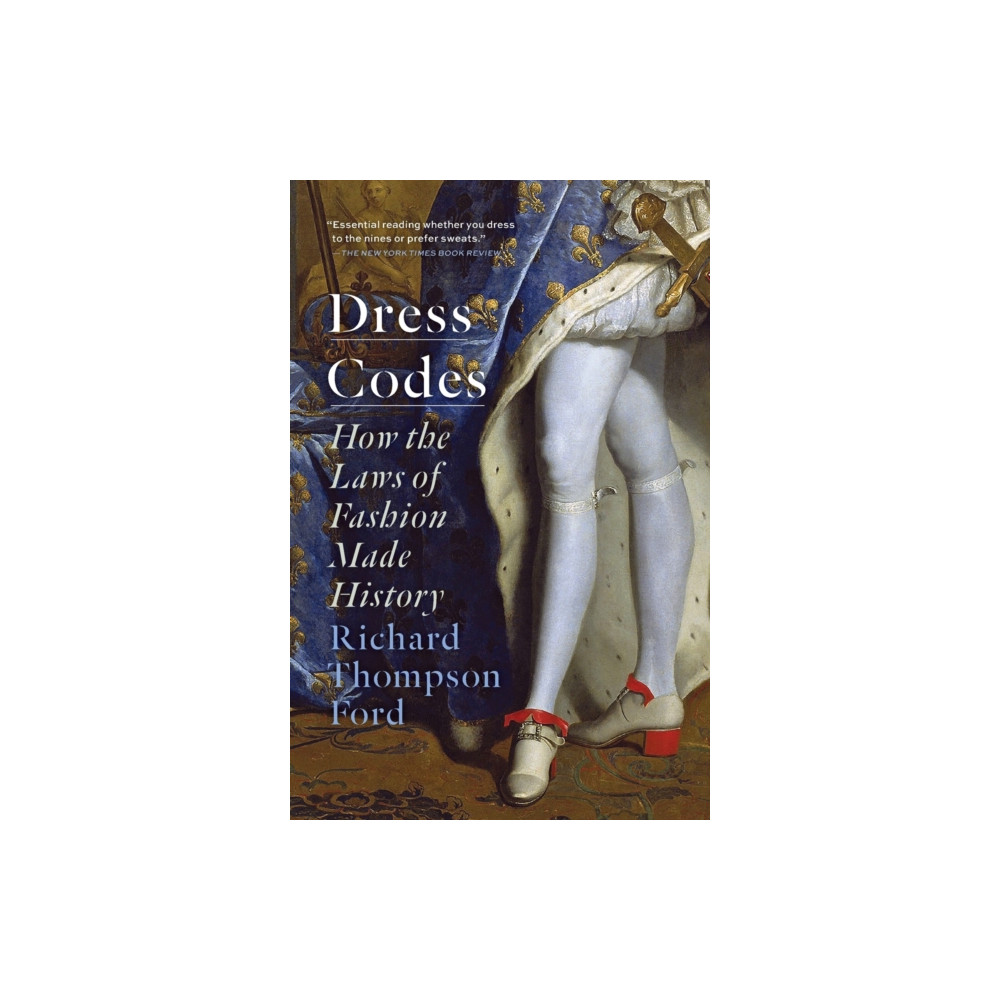
Dress Codes (häftad, eng)
Gästpris:
Ditt medlemspris:
177 kr
243 kr
Kampanjpris! (-6%)
Kampanjpris! (-31%)
- Inköpspriser för medlemmar (Logga in)
- Frakt från 0 kr
- 14 dagars öppet köp
Frågor? Starta chatt

A “sharp and entertaining” (The Wall Street Journal) exploration of fashion through the ages that asks what our clothing reveals about ourselves and our society.
Dress codes are as old as clothing itself. For centuries, clothing has been a wearable status symbol; fashion, a weapon in struggles for social change; and dress codes, a way to maintain political controlMerchants dressing like princes and butchers’ wives wearing gem-encrusted crowns were public enemies in medieval societies structured by social hierarchy and defined by spectacle. In Tudor England, silk, velvet, and fur were reserved for the nobility, and ballooning pants called “trunk hose” could be considered a menace to good order.
The Renaissance-era Florentine patriarch Cosimo de Medici captured the power of fashion and dress codes when he remarked, “One can make a gentleman from two yards of red cloth.” Dress codes evolved along with the social and political ideals of the day, but they always reflected struggles for power and status.
In the 1700s, South Carolina’s “Negro Act” made it illegal for Black people to dress “above their condition.” In the 1920s, the bobbed hair and form-fitting dresses worn by free-spirited flappers were banned in workplaces throughout the United States, and in the 1940s, the baggy zoot suits favored by Black and Latino men caused riots in cities from coast to coast.
Even in today’s more informal world, dress codes still determine what we wear, when we wear it—and what our clothing meansPeople lose their jobs for wearing braided hair, long fingernails, large earrings, beards, and tattoos or refusing to wear a suit and tie or make-up and high heels. In some cities, wearing sagging pants is a crime. And even when there are no written rules, implicit dress codes still influence opportunities and social mobility.
Silicon Valley CEOs wear t-shirts and flip-flops, setting the tone for an entire industry: women wearing fashionable dresses or high heels face ridicule in the tech world, and some venture capitalists refuse to invest in any company run by someone wearing a suit.
In Dress Codes, law professor and cultural critic Richard Thompson Ford presents a “deeply informative and entertaining” (The New York Times Book Review) history of the laws of fashion from the middle ages to the present day, a walk down history’s red carpet to uncover and examine the canons, mores, and customs of clothing—rules that we often take for grantedAfter reading Dress Codes, you’ll never think of fashion as superficial again—and getting dressed will never be the same.
Dress codes are as old as clothing itself. For centuries, clothing has been a wearable status symbol; fashion, a weapon in struggles for social change; and dress codes, a way to maintain political controlMerchants dressing like princes and butchers’ wives wearing gem-encrusted crowns were public enemies in medieval societies structured by social hierarchy and defined by spectacle. In Tudor England, silk, velvet, and fur were reserved for the nobility, and ballooning pants called “trunk hose” could be considered a menace to good order.
The Renaissance-era Florentine patriarch Cosimo de Medici captured the power of fashion and dress codes when he remarked, “One can make a gentleman from two yards of red cloth.” Dress codes evolved along with the social and political ideals of the day, but they always reflected struggles for power and status.
In the 1700s, South Carolina’s “Negro Act” made it illegal for Black people to dress “above their condition.” In the 1920s, the bobbed hair and form-fitting dresses worn by free-spirited flappers were banned in workplaces throughout the United States, and in the 1940s, the baggy zoot suits favored by Black and Latino men caused riots in cities from coast to coast.
Even in today’s more informal world, dress codes still determine what we wear, when we wear it—and what our clothing meansPeople lose their jobs for wearing braided hair, long fingernails, large earrings, beards, and tattoos or refusing to wear a suit and tie or make-up and high heels. In some cities, wearing sagging pants is a crime. And even when there are no written rules, implicit dress codes still influence opportunities and social mobility.
Silicon Valley CEOs wear t-shirts and flip-flops, setting the tone for an entire industry: women wearing fashionable dresses or high heels face ridicule in the tech world, and some venture capitalists refuse to invest in any company run by someone wearing a suit.
In Dress Codes, law professor and cultural critic Richard Thompson Ford presents a “deeply informative and entertaining” (The New York Times Book Review) history of the laws of fashion from the middle ages to the present day, a walk down history’s red carpet to uncover and examine the canons, mores, and customs of clothing—rules that we often take for grantedAfter reading Dress Codes, you’ll never think of fashion as superficial again—and getting dressed will never be the same.
| Format | Häftad |
| Språk | Engelska |
| Utgivningsdatum | 2022-01-18 |
| ISBN | 9781501180088 |
Artikelnummer
2831677
EAN
9781501180088
Leverans:
Denna produkt skickas från oss inom 6 - 7 vardagar. I kassan väljer du om du vill få leverans med Budbee, Airmee, Best Transport, Early Bird, Postnord eller DB Schenker. Vissa speditörer har vikt- eller storleksbegränsningar och kan av den anledningen saknas som alternativ i kassan om du handlar många eller väldigt stora produkter.Fri retur:
För medlemmar gäller fri retur och 14 dagars full returrätt från den dagen du tar emot din leverans. För övriga kostar retur från 49 kr.Undantag för retur- och ångerrätt:
Dessa är exempel på varor som inte omfattas av retur- eller ångerrätt. Observera att det kan finnas andra undantag som inte listas här.- Använda, skadade och/eller inkompletta produkter
- Dagligvaror (livsmedel, läkemedel, nikotinprodukter)
- Hygienartiklar & kroppsnära produkter (rakapparater, in ear-hörlurar, aktivitetsklockor)
- Intimprodukter (menskoppar, kondomer och glidmedel)
- Kosmetikprodukter (inkl. hår- och hudvårdsprodukter, parfymer, etc.)
- Underkläder (inkl. badkläder, underställ och strumpor)
- Ljud- & bildupptagningar, spel/program (om förseglingen brutits eller licensnyckeln erhållits.)
- Teknikprodukter om försegling brutits eller programvara har installerats (mobiltelefoner, surfplattor, laptops, etc.)
- Gratisprodukter
Om du är osäker på om en produkt omfattas av ångerrätt kan du alltid kontakta vår kundtjänst på info@buyersclub.se, så hjälper vi dig gärna!
Leveranser: